Some products in my cocktail collection are older than many of you.
I recently finished the last few drops of my first bottle of Angostura bitters. Not quite sure when I bought it, but my guess is that it was in the mid-80s, not long after I started my cocktail bottle collection.
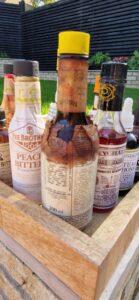
Initially I didn’t appreciate the value of bitters in cocktails. I didn’t favour cocktails with bitters, or indeed lemon juice or sugar syrup. Little did I know about the quality of the French 75, the Whiskey Sour and many other classics. Furthermore you only ever use a few drops at a time and so the bottle lasts well…….. around 40 years in this case. I’m sure the vast majority of bottles of Angostura bitters are supplied to the on-trade and frankly if you’re using it daily in a bar, 200 ml probably won’t last long.
Bitters have become more interesting
Like many other types of food and drink, bitters have become more interesting, varied and numerous. It’s great to be able to put a twist on your cocktail with a selection of grapefruit, peach, chocolate, rhubarb, orange, black walnut and winter spiced bitters. The rhubarb (featured in the excellent rhubarb martini) and chocolate bitters are the ones I use most frequently and they give your finished cocktail an interesting twist. So try adding some to your cocktail collection and enjoy the result.
Old liqueurs
Since then I’ve also finished off a bottle of red curacao. I’m not sure that is even a thing anymore. Back in the 80s, brightly coloured cocktails were the fashion. Consequently the orange flavoured range of curacaos were a useful part of the cocktail paraphenalia enabling you to create cocktails in a range of colours. At one time, I had blue curacao (of course), plus red, dry orange from Bols and even green. I still have some of the green curacao left but again I think it is no longer produced. I’ve never found a great use for it, so I guess it’s no great loss.
How long do products last?
One of the questions I get asked most frequently is how long alcoholic products last. Broadly speaking the stronger the alcoholic content, the longer they will last. I’ve had bottles of whisky, some as long as 30 years in my collection and they’re fine. Admittedly, I keep them in a drinks cabinet so they’re protected from light and kept at a relatively even temperature.
Not everything lasts of course. Cream based liqueurs such as Baileys now have a use by date printed on the bottle. They didn’t used to. I find bottles last longer than this easily but be guided by the date and your own common sense. I’ve you’ve had a bottle on your kitchen window sill for instance, it almost certainly won’t last as long as if you store it in your garage where it will stay relatively cool all year round. The same with spirits or liqueurs containing fruit. These will discolour over time and go brown. They don’t look good so I suggest keeping sloe gins and fruit liqueurs no longer than a year.
It’s also said that vermouths should not be kept for an indefinite period. Robert Haigh in his excellent book Vintage Spirits and Forgotten Cocktails makes the point forcibly that vermouth should be used up soon after it is opened. As he points out, it is a wine in any case and you wouldn’t expect a bottle of wine to taste great months after you opened it, would you?
The rest of it though, you’ll be able to enjoy months or even years after you open the bottles. So enjoy!